
 Posts
Posts


Trump Mega-Donor, a Shipping Magnate, Pushes to End a Shutdown
Whenever I see this, I wonder: how much is enough? How much do you need to the point where if your employees (that she claims to care for), her customers (that she claims to serve), if they or their families die, you can say "I have enough money. I don't need any more. I can use what I have been blessed and wait so people don't put themselves in harms way to make me richer."
I know the answer: It is never enough. All the money in the world wouldn't be enough. All of the praise, the acclaim, the worship, the service, the utter submission of every human being to their every whim wouldn't be enough.
People like this are like emotional black holes, so no matter how much you feed into the gaping maw of their greed its never enough. Even in this time of trouble where all we have to do is let people who can stay home just be home, she's out there pushing for *other people* to risk their lives to make her richer.
Is she in her own stores working on the front lines? Of course not. That's for "lesser people." The Glenn Beck's who bravely offer that people should go back out to work even if we lose 1 to 3 percent of the population - while he stays in his basement bunker. The courageous Wisconsin official who told people to go to the street and vote while they were covered in head to toe personal protection equipment. The protestors brimming with empathy to allow hairdressers to dye their hair because their grey roots were showing - the freedom to allow people to risk their lives or the lives of their family because heaven forbid people should see the protestor's natural hair color!
For them, it's all about Me. Serve Me. Make Me richer. Get sick for My comfort.
And if you die, I'll call you a hero for nailing yourself to a cross of gold for My insatiable greed.
Wednesday, April 22, 2020


Friday, February 10, 2012
How to Make A Drunken Santorum
Ok, kids. You might have heard about that guy Rick Santorum. You've heard stuff like about how he hates on gay people, or thinks women can't do shit in the military, or just that he's a grade a douche bad.
And you're thinking - hey, how can I get something that tastes good but reminds me of this fine, fine man?
Well you're in luck, sucker. Cause here's this drink. It's called the Drunken Santorum. And it's pretty damn good, even if the man who inspired it an awful son of a bitch that nobody should ever associate with, and who really should just be spit upon and tossed out of polite society until he joins the 21st century.
Let's start this.
Ingredients:
Cold brewed coffee
coffee liquor
cream/sugar to taste
whipped cream
dark chocolate
1. Coffee
Make yourself some cold brewed coffee. Why cold brewed? Because that shits good! 1 cup of ground coffee beans, 2 cups of water. Put that shit into a french press cause you're not a fucking heathen, you're a human being who likes taste.
Let it sit for at least 24 hours. Hey, this is fine shit people. You don't want something that tastes like shit like real Santorum. You want it to taste good.

2. Filter it.
Has it been 24 hours? OK, let's filter it. Press down on the handle to your french press. That's right - get that coffee juice out of those beans.
Now we're gonna use a filter. Mason jars are awesome for this. Oh - you're saying "But we put it through the french press why am I filter it?" Maybe you don't need to cause you like your coffee raw. Whatever, but we're getting out the little particulates. You want to taste gravel? Hell no! Let me guess, you also eat with your elbows on the table, too. Well not at my table or I'll smack them off! How do you like that?


And you're thinking - hey, how can I get something that tastes good but reminds me of this fine, fine man?
Well you're in luck, sucker. Cause here's this drink. It's called the Drunken Santorum. And it's pretty damn good, even if the man who inspired it an awful son of a bitch that nobody should ever associate with, and who really should just be spit upon and tossed out of polite society until he joins the 21st century.
Let's start this.
Ingredients:
Cold brewed coffee
coffee liquor
cream/sugar to taste
whipped cream
dark chocolate
1. Coffee
Make yourself some cold brewed coffee. Why cold brewed? Because that shits good! 1 cup of ground coffee beans, 2 cups of water. Put that shit into a french press cause you're not a fucking heathen, you're a human being who likes taste.
Let it sit for at least 24 hours. Hey, this is fine shit people. You don't want something that tastes like shit like real Santorum. You want it to taste good.

2. Filter it.
Has it been 24 hours? OK, let's filter it. Press down on the handle to your french press. That's right - get that coffee juice out of those beans.
Now we're gonna use a filter. Mason jars are awesome for this. Oh - you're saying "But we put it through the french press why am I filter it?" Maybe you don't need to cause you like your coffee raw. Whatever, but we're getting out the little particulates. You want to taste gravel? Hell no! Let me guess, you also eat with your elbows on the table, too. Well not at my table or I'll smack them off! How do you like that?

3. Build the drink.
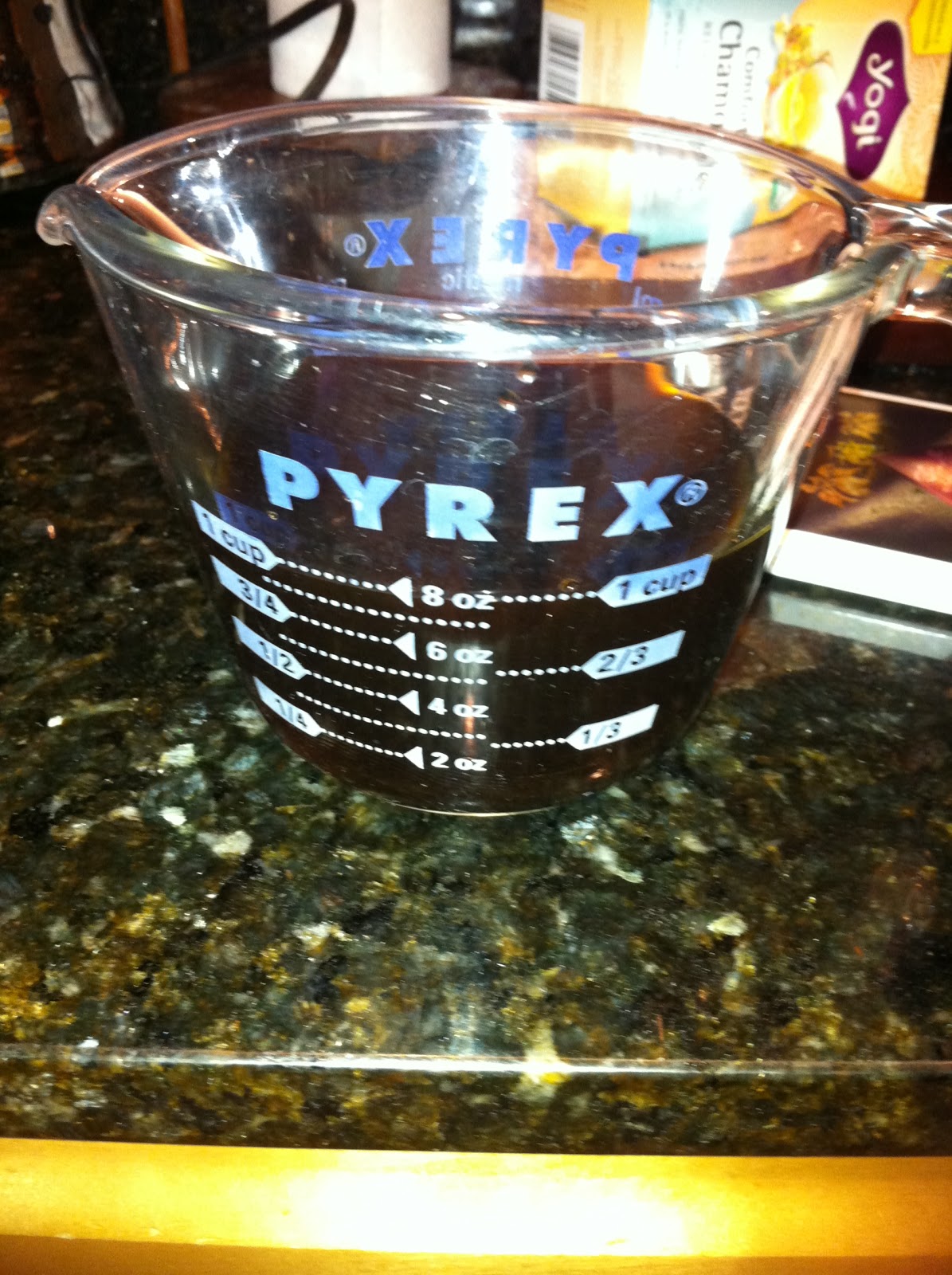
Get your coffee. 3/4 cup of coffee, 3/4 cup of some coffee liquor. Now, maybe you like more alcohol cause you're a raging drunk who can't go more than an hour without getting hammered. Why the hell not. Add in some vodka if you just want more booze - it won't fuck with the taste. Or if you want to feel the burn and feel like a motherfucker, add in some rum.

4. Taste it up.
How do you like your coffee? Are you civilized and add in some cream or soy milk or almond milk? Or do you think you're a total bad ass and just do it black?
I don't give a shit. It's your damn drink! Make it how you like! Me, I put in some soy milk. It's got texture. That's right, you little crying baby. I said texture. Like how it feels on your tongue like the skin of a fine woman. Yeaaaah. I thought you'd like that.

5. Froth and Fleck
At this point, it's nothing! You've made a cold coffee with alcohol, and that ain't shit! We're making this a Drunken Santorum, and that means we need froth.
Or just some whip cream. Pile it on. Yeah. Look how creamy that is. Oh yeah. Now get some chocolate. And none of that prissy white chocolate shit. That ain't chocolate - chocolate has cocoa and you know how much white chocolate has? NONE THAT'S WHY IT'S CALLED WHITE CHOCOLATE YOU TOOL.
Dark chocolate is best. Grate it, put it on the whipped cream. Yeah. That's now looking like a frothy mixture.


6. Drink that fucker down.
Now drink it. Don't be a chicken. You might get something that people see on your face. You know what you say? "Yeah, this is some tasty ass Drunken Santorum."
Oh, and stick your pinky out when you drink it. You're not some fucking heathen you know.

Thursday, January 26, 2012
White Knight or Sacrificial Pawn
I know there's been a lot of (deserved) angst regarding a potential agreement between the Obama administration, the Justice department, and the biggest financial firms.
The deal would go like this:
Justice Department(JD): Hey, major banks?
Major Banks(MB): (Looks up from eating a baby.) Yesssss?
JD: Remember how you made billions of dollars and then crashed the economy, caused massive unemployment and drove people's pension and retirement funds into a downward spiral?
MB: I kinda remember that. Something before I started making money hand over fist, made record profits and gave out bonuses to the highest people while laying off more people while asking for more tax cuts because without more money I can't employ people?
JD: Yeah, it was when you got a massive bailout so you were able to survive.
MB: I was forced to take that I'd have been fine without it!
JD: Whatever. Look, we did some checking, and looks like some of those billions of dollars you made came from fraud.
MB: Fraud? What's wrong with that?
JD: It's illegal.
MB: Really? Greenspan said that the market would correct fraud, that the market was everything, and Ayn Rand was soooo sexy -
JD: Nope - fraud is still illegal. Telling people their investment was good while you knew it was bad is illegal. Faking signatures on mortgage documents to change the conditions of a loan - that's illegal. Submitting paperwork showing someone is a good mortgage risk when you know they're not - that's illegal.
MB: But - I'm innnocent! It wasn't me - it was the one armed man!
JD: Yeah, well, I got word from my boss. Hold on.
MB: What are you doing - let me go - ow that hurts!
JD: I just slapped you on the wrist!
MB: But it stings so hard!
JD: Promise never to massively defraud people and institutions again?
MB: Oh I promise!
JD: Are you sure - because it seems like you guys are big on the repeat offenders list. You keep promising to change, get a fine, and then nothing happens.
MB: Really really we promise this time! Just don't let mean judges actually call us out on never actually fulfilling our promise to do better!
You get the idea. And it looked like the Obama administration was going to create a deal that would basically give a slap on the wrist to the financial firms - or even let states investigate the crimes.
This makes Obama's State of the Union address where he announced a financial fraud investigations team so interesting. And it's not just the announcement of this group - it's also who's heading it up.
Eric Schneiderman, Attorney General of New York State, has been very adamant about making the financial industry pay for their bad behavior. Only - it looks like this investigative task group has no interest in really doing anything interesting. Schneiderman might just wind up being a figurehead, lending his name to the project.
So which is it? Will he be the white knight to lead the charge against the giant vampire squid - or someone sacrificed to lend a vener of respectability to the cause?
Friday, January 20, 2012
The Scorched Earth Primaries and Republican Tactics
When Obama became President of the United States, there was much talk about an era of "new bipartisanship." He came in and started offering the hand of friendship, nominating Republicans for top offices like ambassadors and important policy decisions. His health care plan was crafted to mostly a wish list of Republican ideas - mandated health insurance, for example.
The Republican response was to basically say "If we don't get our way on *everything*, then you get *nothing*." Ideas they had championed for decades - Pay As You Go legislation to head off deficits, for example, ideas that Republicans proposed were suddenly voted against if Democrats were willing to go along with it. Chuck Grassley proposed mandated health insurance - then attacked it as unconstitutional and dangerous when Obama put it into the health care bill.
The plan seemed simple: All for me, and nothing for you. Not just nothing for you - the Republicans have spent nearly 4 years saying "Screw you" to everything and anything the Democrats propose, even if 24 hours before Republicans agreed with it. Every vote in the Senate is now cancelled unless Democrats can get a 60 vote majority. Every Obama nomination requires the same. Oh, did we pass a law saying there was consumer protections? Yeah, good luck getting anyone to fill the seat to head it up.
The idea is by denying Obama anything and everything, they can get what they want. And for the most part, it worked. When faced with blowing up the entire country or giving in to Republican demands, Democrats have decided not to let the entire system fall apart. So Republicans have learned the lesson: acting like terrorists holding a bomb to the United States will get you result.
And now - that mentality has struck the Republican primaries.
You have Mitt Romney, the would-be nominee. On paper, he doesn't look too bad. Republican who was in governor of a liberal state. Has enough money. No major skeletons in the closet. Clean cut. Looks nice.
And yet - he can't close the deal. Maybe it's the "I was for abortion now I'm against it," "My health care plan for Massachusetts which the Obamacare plan is based on is a horrible thing," "Gay marriage is awesome until I'm running for the Republican presidential ticket and then it's awful" issues. Or it's the "I only pay 15% in taxes and I have $200,000,000 in the bank - yet I pay less money in taxes than a secretary because that's totally fair because mine is investments instead of actual work." Maybe it's the Mormon thing - evangelicals have their scrotums vanish up into their bodies at the idea of a Mormon president ordering the US military to send Mormon missionaries two by two unto every doorstop in America.
Whatever the reason, the scorched earth policy the Republicans took with Obama - is now being visited upon Mitt Romney. Newt Gingrich is totally unelectable, he's been making racist comments about how "black people should stop asking for food stamps and ask for jobs" (Why black people, specifically, Newt? I mean, "poor people" is at least a Republican talking point for the lazy, but why are "black people" the ones not working compared to the what - "hard working white man on medicare who's not on the government dole unlike those lazy black people"?). Same with Senator Rick Santorum. You'd think that they'd fall in line, support their candidate's party-
And yet they are doing everything they can to destroy Romney. Calling him a "moderate liberal." Rick Perry is dropping out and going to support Gingrich. The conservative christian base is nominating anyone but "that Mormon" because well - you know. Mormons aren't Christians (even though they worship Jesus Christ as their Lord and Savior from sin forever and forever amen - but that's not Christian enough for those folks).
From what I'm seeing, the Republicans are willing to destroy even themselves if they don't get what they want. "We don't want Romney, and we have this bomb set to go off if he's nominated."
I don't know if Romney could beat Obama in the general election. But at this rate, it won't matter if the Republicans are willing to destroy themselves.
The Republican response was to basically say "If we don't get our way on *everything*, then you get *nothing*." Ideas they had championed for decades - Pay As You Go legislation to head off deficits, for example, ideas that Republicans proposed were suddenly voted against if Democrats were willing to go along with it. Chuck Grassley proposed mandated health insurance - then attacked it as unconstitutional and dangerous when Obama put it into the health care bill.
The plan seemed simple: All for me, and nothing for you. Not just nothing for you - the Republicans have spent nearly 4 years saying "Screw you" to everything and anything the Democrats propose, even if 24 hours before Republicans agreed with it. Every vote in the Senate is now cancelled unless Democrats can get a 60 vote majority. Every Obama nomination requires the same. Oh, did we pass a law saying there was consumer protections? Yeah, good luck getting anyone to fill the seat to head it up.
The idea is by denying Obama anything and everything, they can get what they want. And for the most part, it worked. When faced with blowing up the entire country or giving in to Republican demands, Democrats have decided not to let the entire system fall apart. So Republicans have learned the lesson: acting like terrorists holding a bomb to the United States will get you result.
And now - that mentality has struck the Republican primaries.
You have Mitt Romney, the would-be nominee. On paper, he doesn't look too bad. Republican who was in governor of a liberal state. Has enough money. No major skeletons in the closet. Clean cut. Looks nice.
And yet - he can't close the deal. Maybe it's the "I was for abortion now I'm against it," "My health care plan for Massachusetts which the Obamacare plan is based on is a horrible thing," "Gay marriage is awesome until I'm running for the Republican presidential ticket and then it's awful" issues. Or it's the "I only pay 15% in taxes and I have $200,000,000 in the bank - yet I pay less money in taxes than a secretary because that's totally fair because mine is investments instead of actual work." Maybe it's the Mormon thing - evangelicals have their scrotums vanish up into their bodies at the idea of a Mormon president ordering the US military to send Mormon missionaries two by two unto every doorstop in America.
Whatever the reason, the scorched earth policy the Republicans took with Obama - is now being visited upon Mitt Romney. Newt Gingrich is totally unelectable, he's been making racist comments about how "black people should stop asking for food stamps and ask for jobs" (Why black people, specifically, Newt? I mean, "poor people" is at least a Republican talking point for the lazy, but why are "black people" the ones not working compared to the what - "hard working white man on medicare who's not on the government dole unlike those lazy black people"?). Same with Senator Rick Santorum. You'd think that they'd fall in line, support their candidate's party-
And yet they are doing everything they can to destroy Romney. Calling him a "moderate liberal." Rick Perry is dropping out and going to support Gingrich. The conservative christian base is nominating anyone but "that Mormon" because well - you know. Mormons aren't Christians (even though they worship Jesus Christ as their Lord and Savior from sin forever and forever amen - but that's not Christian enough for those folks).
From what I'm seeing, the Republicans are willing to destroy even themselves if they don't get what they want. "We don't want Romney, and we have this bomb set to go off if he's nominated."
I don't know if Romney could beat Obama in the general election. But at this rate, it won't matter if the Republicans are willing to destroy themselves.
Thursday, January 05, 2012
Life - is like Minesweeper
We like to think that life is like chess. Everything is set up equally on either side, and it’s just our intelligence, our experience, our wits against the rest of the world. Against any and other comers, and we rise or fall based on how well we play.
I’ve learned that life isn’t like that at all. Life is more like Minesweeper.
Some of us were born under simpler, easier circumstances. Everything charted out for us, already set up with homes and school and contacts that make the decisions to easy. Oh, you have to guess a little - perhaps you’re born with a genetic deformity, but really - odds are, you’re going to come out on top.
I’ve learned that life isn’t like that at all. Life is more like Minesweeper.
Some of us were born under simpler, easier circumstances. Everything charted out for us, already set up with homes and school and contacts that make the decisions to easy. Oh, you have to guess a little - perhaps you’re born with a genetic deformity, but really - odds are, you’re going to come out on top.
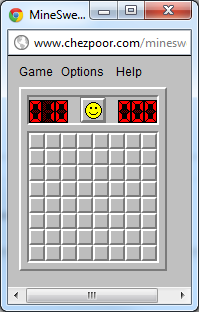
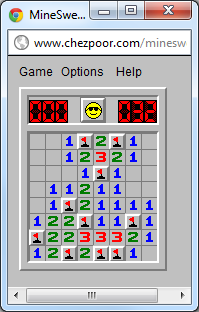
But for so many of us, life is far more complex. So many choices. You have a strategy, you avoid the mines, use your wits. Eliminate what doesn’t work and find your path. Perhaps you’re smarter than other people and get further.
What you can never escape, though, is that sooner or later - you have to guess. There’s no way to logic your way out of it. You can apply statistics, reason, and all the rest to the problem. But at the end of the day, you’re going to look across your options - and you have to guess. There is simply no. Other.Way.
What you can never escape, though, is that sooner or later - you have to guess. There’s no way to logic your way out of it. You can apply statistics, reason, and all the rest to the problem. But at the end of the day, you’re going to look across your options - and you have to guess. There is simply no. Other.Way.
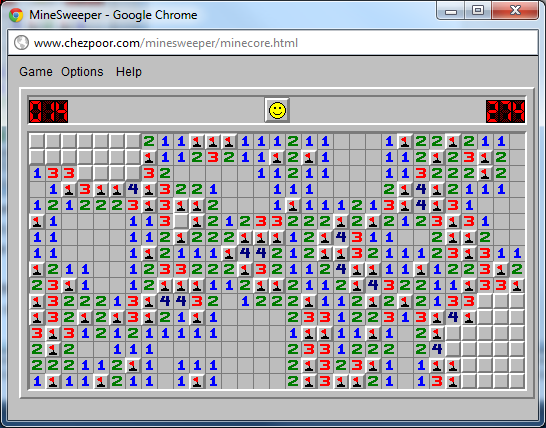
And odds are - you’re going to guess wrong. You’re going to fail if you want to win the game - or else you have to settle with what you have, and just let it be.
Maybe you’ll even guess right this time - but what about next time? Or the next?
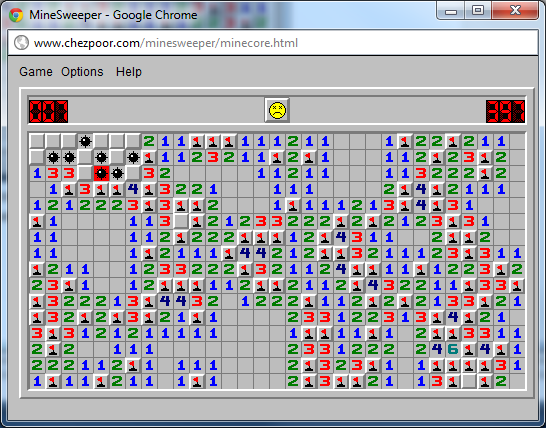
Odds are - you’re not going to be on top. There is no luck, there is no destiny - you play every trick and idea and though you have, but ultimately - it comes down to deciding if you’re going to settle - or going to challenge life one more time and hope it doesn’t blow up in your face.
Friday, December 30, 2011
The Peanut Butter Banana Sandwich Guide for People Who Aren't Whiny Babies
WARNING TAKE THIS SHIT SERIOUSLY!
OK, look, people.
This stuff tastes good. In fact, it tastes so good you don't dare eat it. Eating this food is so good that it can cause men to spontaneously lactate and women to sprout gigantic wieners and impregnate themselves! Under no circumstances do not eat this unless you have approval from a doctor!
Still with me? Now pay attention so you don't get lost and accidentally blow your brains out with awesomeness!
Step 1: Get your shit together. You need a banana. Some peanut butter. Bread. Butter. No, I didn't say margarine - I said butter damn it we want this stuff to taste good.

Now peel that banana. Don't be a chicken about this. Yes I know it's all phallic shaped and you want to put it in your mouth, pervert. Don't. Save it for the sandwich.
 Yeah isn't that sexy? Now slice that stuff lengthwise. Yeaaah doesn't that look pretty. Appreciate the banana - it is after all the atheist's nightmare. Yes, there's actually motherfuckers dumb enough to think that.
Now slice those suckers up. Lengthwise you tool! Oh, are you gonna cry now? Go ahead. You're not worthy of this sandwich unless those are tears of blood from how good this is gonna taste!

Now, smear that bread with peanut butter. Don't be Scrooge with this stuff - Jimmy Carter himself might have planted the peanut trees, and you're gonna damn well eat them, enjoy them, and get that protein rush from them RRAAARRRHHH YEEEAAAAHHHHH.
 Lay those bananas down. Get them really close to each other. Look how they're spooning each other. Those bananas love each other the way your girlfriend loves you. Or your boyfriend. Or whatever the hell you date. Better not be a turtle though cause those fuckers bite.
Where was I? Yeah. Bananas. Put them on, then cut off the edges. Those you can shove in your mouth cause like the buffalo, we don't waste any part of the banana. Except the peel.
 See this? It's called a skillet. Love your skillet it's your best friend now and you will die for it. Put it on the range and heat that sucker up. Not too hot, damn it, don't be a moron.
 Now put butter on the top side of your sandwich. Yeaaahhhhh make that sucker nice and lubricated. I bet you're getting excited now? Well keep it in your pants.
 Put the sandwich onto the skillet. Smell that? It's melting butter. It smells like flavor, sucker. Cook that shit up. Listen to the sound it makes. If your nipples aren't hard now nothing's going to do it.
Check the bottom - it better be a nice golden brown. I swear to Yahweh you make this sandwich black you shouldn't let yourself live.

Yeah look at that. The only thing prettier that brown is a Hawaiian girl in a string bikini. Are you paying attention to your sandwich or are you thinking about the girl? Turn the sandwich over you fool and cook the other side too!
 Yeaaaahhhh now get some blueberries because they'll make you grow hair on your crotch. Look at those together. Does that look right to you? Fuck no do it right!
 Cut that sucker into triangles. No, not rectangles cause rectangles are for chumps! Triangles damn you! Split it open. Oh look at that peanut butter all warm and dripping. Touch it. You know you want to.
Perv.
 Put the blueberries in the middle. Like that sandwich is eating those little tasty balls of antioxidants. That's right - your sandwich is eating the blueberries, and you're gonna eat the sandwich. It's a circle of life thing AND YOU ARE THE TOP PREDATOR JACKASS!

Now eat that shit. I said eat it. Yeaaaahhhh isn't that good.
You're welcome.
OK, look, people.
This stuff tastes good. In fact, it tastes so good you don't dare eat it. Eating this food is so good that it can cause men to spontaneously lactate and women to sprout gigantic wieners and impregnate themselves! Under no circumstances do not eat this unless you have approval from a doctor!
Still with me? Now pay attention so you don't get lost and accidentally blow your brains out with awesomeness!
Step 1: Get your shit together. You need a banana. Some peanut butter. Bread. Butter. No, I didn't say margarine - I said butter damn it we want this stuff to taste good.

Now peel that banana. Don't be a chicken about this. Yes I know it's all phallic shaped and you want to put it in your mouth, pervert. Don't. Save it for the sandwich.


Now, smear that bread with peanut butter. Don't be Scrooge with this stuff - Jimmy Carter himself might have planted the peanut trees, and you're gonna damn well eat them, enjoy them, and get that protein rush from them RRAAARRRHHH YEEEAAAAHHHHH.

Where was I? Yeah. Bananas. Put them on, then cut off the edges. Those you can shove in your mouth cause like the buffalo, we don't waste any part of the banana. Except the peel.


Check the bottom - it better be a nice golden brown. I swear to Yahweh you make this sandwich black you shouldn't let yourself live.

Yeah look at that. The only thing prettier that brown is a Hawaiian girl in a string bikini. Are you paying attention to your sandwich or are you thinking about the girl? Turn the sandwich over you fool and cook the other side too!


Perv.


Now eat that shit. I said eat it. Yeaaaahhhh isn't that good.
You're welcome.
Wednesday, November 30, 2011
I got a call from the Sun Trust social media rep
I've been thinking about this, and decided to talk about it.
Some of you saw and may have commented on my Sun Trust post the other day, how I was annoyed that they had charged me a $17 "monthly checking service fee" (evidently I'm part of the checking account level where you need $5k in assets plus direct deposits to avoid the fee. There's a lower tier where the fee is $7 unless you have direct deposit, which I thought I was part of).
Now, my solution to the problem is going to be very simple. I've shifted my direct deposits to a different bank, and once things have cleared at Sun Trust, I will simply close the account.
Yesterday, I got a call from the Sun Trust social media representative. I guess my Google Talk comment came up on their radar and they wanted to know how they could help.
Honestly, I kind of blew them off - I was in the middle of working, and really didn't want to have a chat then. And while they left their number, I really don't feel like calling back, either.
Because what would be the point? Will they sit back and say "You know, charging $17 a month for a checking account is rather silly? I mean, sure, if people are writing a ton of checks or something maybe I can see it perhaps possibly - but just to do a blanket 'This kind of checking account costs $17 a month' is silly. Let's stop doing it!"
No. They won't.
Used to be the whole point of a bank account went like this: I give the bank permission to hold my money. Some of it would go into a savings account to earn interest, some might go into a checking account to keep it safe but grant me the ability to pay people. There was a relationship there: the bank would use my money so they could make reasonable loans to people, charge them interest. Then, in return, they would hold onto my money, pay me interest on my savings, maybe no interest or minor fees when I ordered new checks on my checking account, and everyone was happy. A banker could make about 1.2 times the national average in income, money was protected, and everyone was happy.
But - that's not the case. Now, banks just can't "make enough money to pay their employees and have profit for their shareholders." Now it's "We must make a ton of money for the shareholders, via any way we can. Offer crappy loans to home owners so we can sell it up to an ignorant Wall Street and let other people hold the bag? Sure. Charge fees that have no bearing upon the actual cost of the checking account? Go for it.
"Anything we can do to maximize our profit for our shareholders is a Good Thing, and if we don't do that, then the shareholders will go elsewhere."
Basically, too many banks have decided that their customer is the shareholder, not the people who put their trust and money into the bank.
I apologize if I seemed rude, Sun Trust social media rep. I didn't mean to be, but honestly I had a hammer in one hand and a screwdriver in the other and didn't feel like chatting. And, honestly, I don't feel it would have done any good. I didn't want to hear your explanations, because I don't care to hear them.
I have a checking account at a credit union, and somehow, they can figure out a way to pay me more in interest/dividends than I've gotten from a "big bank" in ages. They don't feel the need to charge me fees just for my checking account in a moderate, normal way.
So if and when banks like Sun Trust, Bank of America, and the like decide to become competitive again, and perhaps decide that the banks customers are the ones giving them their money to hold, and not shareholders who invested in them - then I'll come back.
Until then, there's really nothing to talk about.
Some of you saw and may have commented on my Sun Trust post the other day, how I was annoyed that they had charged me a $17 "monthly checking service fee" (evidently I'm part of the checking account level where you need $5k in assets plus direct deposits to avoid the fee. There's a lower tier where the fee is $7 unless you have direct deposit, which I thought I was part of).
Now, my solution to the problem is going to be very simple. I've shifted my direct deposits to a different bank, and once things have cleared at Sun Trust, I will simply close the account.
Yesterday, I got a call from the Sun Trust social media representative. I guess my Google Talk comment came up on their radar and they wanted to know how they could help.
Honestly, I kind of blew them off - I was in the middle of working, and really didn't want to have a chat then. And while they left their number, I really don't feel like calling back, either.
Because what would be the point? Will they sit back and say "You know, charging $17 a month for a checking account is rather silly? I mean, sure, if people are writing a ton of checks or something maybe I can see it perhaps possibly - but just to do a blanket 'This kind of checking account costs $17 a month' is silly. Let's stop doing it!"
No. They won't.
Used to be the whole point of a bank account went like this: I give the bank permission to hold my money. Some of it would go into a savings account to earn interest, some might go into a checking account to keep it safe but grant me the ability to pay people. There was a relationship there: the bank would use my money so they could make reasonable loans to people, charge them interest. Then, in return, they would hold onto my money, pay me interest on my savings, maybe no interest or minor fees when I ordered new checks on my checking account, and everyone was happy. A banker could make about 1.2 times the national average in income, money was protected, and everyone was happy.
But - that's not the case. Now, banks just can't "make enough money to pay their employees and have profit for their shareholders." Now it's "We must make a ton of money for the shareholders, via any way we can. Offer crappy loans to home owners so we can sell it up to an ignorant Wall Street and let other people hold the bag? Sure. Charge fees that have no bearing upon the actual cost of the checking account? Go for it.
"Anything we can do to maximize our profit for our shareholders is a Good Thing, and if we don't do that, then the shareholders will go elsewhere."
Basically, too many banks have decided that their customer is the shareholder, not the people who put their trust and money into the bank.
I apologize if I seemed rude, Sun Trust social media rep. I didn't mean to be, but honestly I had a hammer in one hand and a screwdriver in the other and didn't feel like chatting. And, honestly, I don't feel it would have done any good. I didn't want to hear your explanations, because I don't care to hear them.
I have a checking account at a credit union, and somehow, they can figure out a way to pay me more in interest/dividends than I've gotten from a "big bank" in ages. They don't feel the need to charge me fees just for my checking account in a moderate, normal way.
So if and when banks like Sun Trust, Bank of America, and the like decide to become competitive again, and perhaps decide that the banks customers are the ones giving them their money to hold, and not shareholders who invested in them - then I'll come back.
Until then, there's really nothing to talk about.
Subscribe to:
Posts (Atom)